A garden swing in autumn and winter.
A garden swing is not a summer object. Built from the right timber it stays outside through autumn rain, under snow and through freeze-thaw; on a covered terrace or in a conservatory it is used year-round. This guide explains concretely how a solid iroko swing gets through winter, the 20-minute preparation, and how ordering and delivery work in the cold months.
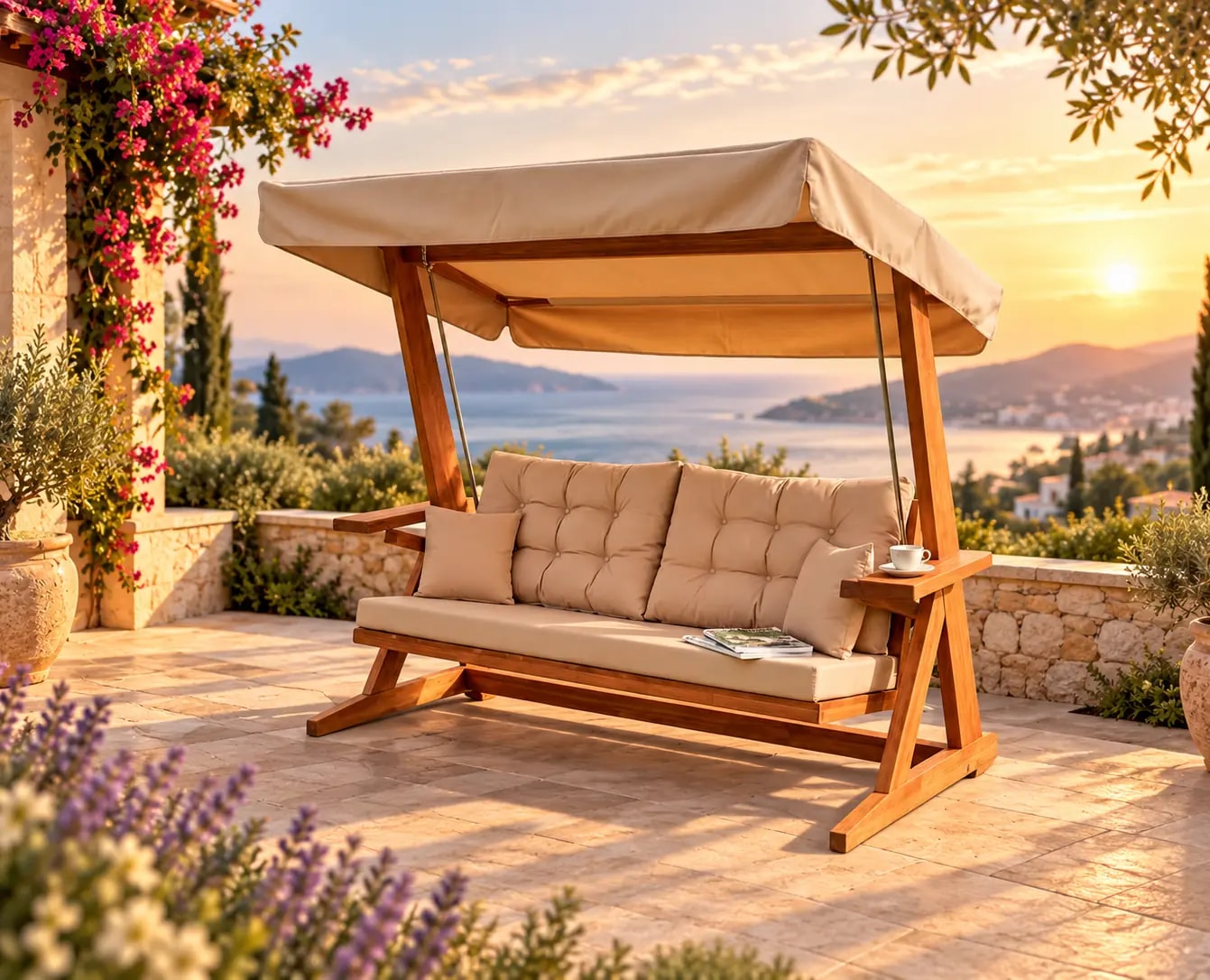
A solid iroko garden swing can stay outside in winter: the timber does not crack at −20°C, does not swell in rain and is unaffected by snow and frost. Two things to do: bring the cushion indoors and apply one coat of teak oil in spring. On a covered terrace or in a conservatory the swing is used in all four seasons. Our Gelibolu factory produces through winter; delivery is 7-14 days in autumn and winter too.
Why iroko withstands winter
Iroko (Milicia excelsa) is an African hardwood with EN 350 durability class 1-2 and a high natural oil and silica content. That content limits water uptake; the fibre separation and cracking seen in cheap pine or treated timber during freeze-thaw cycles does not occur in iroko.
Density is 650-750 kg/m³, which keeps the frame in shape under snow load and in winter wind. The Italian teak-oil finish does not form a film; it penetrates the wood, so there is no coating layer to crack and flake in winter.
The only change after a winter is a slight dulling of the surface. It is cosmetic, not structural; one coat of oil in spring restores the look.
Snow, rain, frost: what happens and what does not
Snow: in the regions of Türkiye where garden swings are used, snow is occasional and short-lived. Whatever settles on the roof is no load for a frame designed for 400 kg of seating. It need not be cleared; it can simply melt.
Rain: the roof pitch drains water. No water pools on the seat; the timber wets, dries and keeps its shape. No wiping is needed after rain.
Frost: cracking is caused by water freezing and expanding inside the wood. Iroko's low water uptake removes that mechanism; nights at −20°C and below show no structural effect.
Wind: the assembled swing weighs 101 kg. In an open, exposed garden we still recommend anchoring; the assembly guide marks the foot anchoring points.
The 20-minute winter preparation
Bring the cushion indoors. The fabric is solution-dyed olefin: colour-fast and water-repellent, but leaving it in a wet-dry cycle all winter is unnecessary. Store it dry and ventilated.
Clean the surface with a soft brush and water. Leaves and dust hold moisture on the timber; removing them is enough, no detergent needed.
Check the fixings by eye. The wood has moved over summer; the hanger bolts are checked once for tightness.
If you use a cover, choose a breathable one. Wrapping tightly in nylon or tarpaulin traps moisture and does the opposite of protecting. Leaving the swing uncovered is entirely safe; a cover is a preference, not a requirement.
On a covered terrace and in a conservatory
On a glazed terrace, in a conservatory or on a large enclosed balcony the swing is part of the living space all year. The clearance needed is the same as in the garden: 320 × 200 cm of clear floor and 220 cm ceiling height. See our dimensions guide for detail.
The one thing to watch indoors is the heat source. Keep at least 1 metre from a fireplace, stove or radiant heater; constant one-sided heat dries one face of the wood faster than the other.
Humidity in a conservatory is usually lower than outdoors. Iroko is stable in that condition too; one oil refresh a year is enough.
How ordering and delivery work in winter
Our Gelibolu factory produces twelve months a year; autumn and winter orders go through the same process as summer ones. Delivery is 7-14 days, with free shipping to all 81 provinces.
The swing arrives flat-packed; assembly is possible in winter. If it is going on a covered terrace, weather does not affect assembly at all.
A swing installed in autumn is in use from the first day of spring. That is a timing note; the product is made under the same conditions all year.
Where and how it is used in winter
Four typical locations, the winter use of each and the single action required.
| Location | Autumn-winter use | Action |
|---|---|---|
| Open garden | Stays out in rain and snow; used on dry days | Cushion indoors, one coat of oil in spring |
| Covered terrace / glazed balcony | Daily use in all four seasons | 1 m from heat sources |
| Conservatory | Daily use in all four seasons | One oil refresh a year |
| Open balcony | Use on dry days; anchor if wind-exposed | Cushion indoors, check foot anchoring |
Frequently asked about autumn and winter
Can a garden swing stay outside in winter?
A solid iroko swing can. Its low water uptake means it does not crack in freeze-thaw and it carries the snow load. Only the cushion is brought indoors.
Do I need to cover the swing in winter?
No. If you want a cover, choose a breathable one; wrapping tightly in nylon or tarpaulin traps moisture and causes damage.
Do I have to clear snow off the swing?
No. Snow settling on the roof is not a meaningful load for a frame with 400 kg seating capacity. It melts on its own.
Does the wood change colour over winter?
The surface may dull slightly. It is cosmetic; one coat of Italian teak oil in spring restores the look.
Will delivery be delayed if I order in winter?
No. The factory produces all year; delivery is 7-14 days in autumn and winter as well, with free shipping to all 81 provinces.
What does a covered terrace need for a swing?
The same space as a garden: 320 × 200 cm clear floor and 220 cm ceiling. Keep at least 1 metre from heat sources.
In production through winter.
Ask about dimensions, covered-terrace suitability or winter delivery on WhatsApp and speak directly with the maker.
Write on WhatsApp